Book
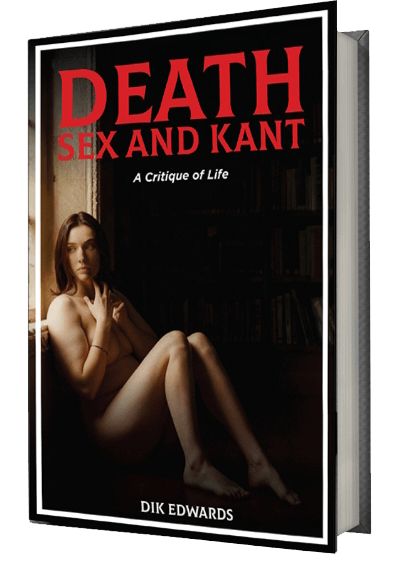
Death sex and kant
Death, Sex and Kant is a philosophical novel concerned with how people live once certainty has eroded. Through a network of intellectually curious and emotionally exposed characters, the book explores desire, power, mental health, politics, and the pursuit of knowledge. Cambridge functions not just as a setting, but as a symbol of disciplined thought placed under pressure by human impulse.
The novel engages deeply with philosophical traditions, drawing on Kant, Nietzsche, Wittgenstein, and Marx, while remaining rooted in physical and emotional experience. Sexuality is central, not as provocation alone, but as a force that challenges rational control and reveals vulnerability. Death appears throughout the narrative as both an event and an idea, shaping how characters understand meaning and responsibility.
This is not an easy or reassuring book. It is intentionally demanding, questioning whether philosophy can truly guide life, or whether meaning is created through action, desire, and confrontation with one’s limits. Death, Sex and Kant invites readers to think seriously about how they live, what they desire, and what they believe can be known.